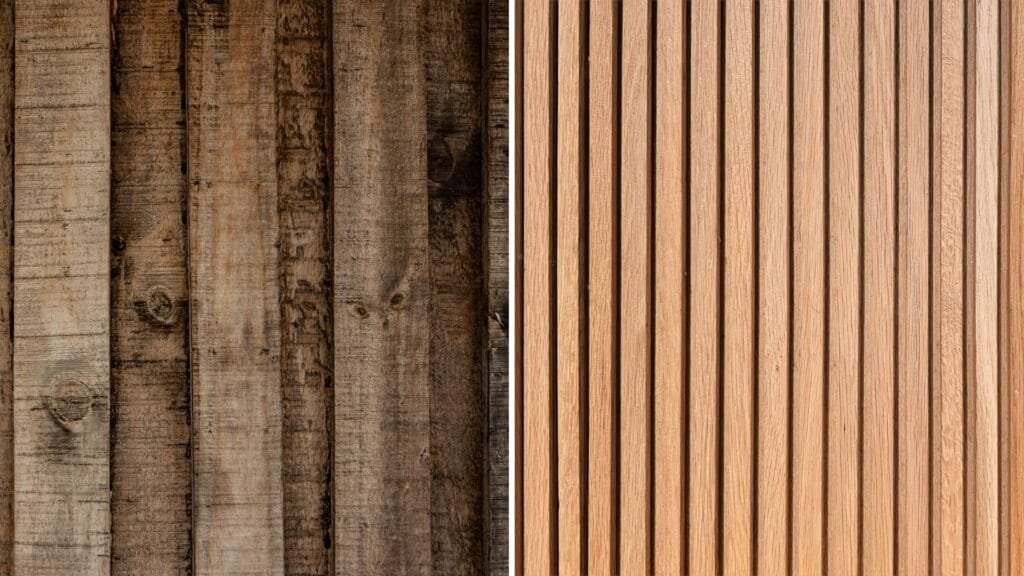
When choosing timber flooring, homeowners often face one big question: Is reclaimed wood flooring really more durable than new timber? It’s a fair question, especially with reclaimed materials becoming a favourite among designers and sustainability-minded homeowners alike.
While many people choose reclaimed wood for its rustic charm and unique history, its practical advantages are just as compelling. Properly sourced and restored reclaimed floorboards often outperform new timber in terms of strength, stability, and lifespan. In this post, we’ll explore what makes reclaimed wood so durable, how it compares to modern alternatives, and why it’s a smart long-term investment for any property.
The Strength of Old-Growth Timber
One of the key reasons reclaimed flooring stands the test of time is its origin. Most reclaimed boards come from old-growth timber – wood harvested from trees that grew slowly over decades or even centuries. These older trees developed tighter growth rings, creating denser, more resilient wood.
In contrast, much of today’s timber comes from fast-grown plantation trees, which tend to be softer and less stable. The difference is noticeable: old-growth wood is harder, heavier, and less likely to warp or dent.
That natural density gives reclaimed flooring an unmatched durability that modern timber often can’t replicate. It’s one of the reasons reclaimed floors can continue performing beautifully for decades – even after generations of prior use.
Naturally Seasoned and Dimensionally Stable
Another major advantage of reclaimed wood flooring is that it’s already stood the test of time. After decades of exposure to varying temperatures and humidity, the timber has naturally dried and settled. This process, known as seasoning, stabilises the wood and reduces the likelihood of expansion or contraction once installed.
New timber, on the other hand, still needs to adapt to its environment. Even when kiln-dried, fresh wood can shift as it acclimatises, sometimes leading to gaps, cupping, or movement over time.
Because reclaimed wood has already undergone this natural seasoning process, it’s more dimensionally stable – meaning your floors are less likely to warp, crack, or buckle. For homeowners, that translates to a smoother, longer-lasting finish that can handle everyday wear and tear.
Built to Last: Proven Longevity
The simple fact that reclaimed flooring is still around today proves its endurance. Many reclaimed boards come from historic buildings, barns, and factories that have already withstood centuries of use. When this timber is reclaimed, cleaned, and restored, it’s given a second life – but its strength and integrity remain intact.
Unlike many new timbers that are only a few years old when milled, reclaimed wood has been tried and tested by time. When properly maintained, reclaimed floors can last just as long, if not longer, than brand-new hardwood installations.
Additionally, reclaimed timber often benefits from craftsmanship that is difficult to find in modern mass-produced materials. Traditional milling techniques and the use of older, high-quality wood contribute to a level of durability that’s hard to match.
Resistant to Everyday Wear and Tear
Because reclaimed wood is denser and better seasoned, it tends to resist dents, scratches, and daily wear more effectively than new softwood flooring. This makes it an excellent choice for high-traffic areas like hallways, kitchens, and living rooms.
Even when signs of wear do appear, they tend to enhance the wood’s natural patina rather than detract from its beauty. Unlike modern finishes that can look worn out, reclaimed flooring often becomes more attractive with age, deepening in colour and texture over time.
It’s also worth noting that reclaimed boards can be sanded and refinished multiple times, extending their lifespan and maintaining their integrity for decades to come.
Sustainable Strength: Good for Your Home and the Planet
Durability isn’t just about how long your floors last, it’s also about the environmental impact of your choices. By choosing reclaimed flooring, you’re investing in timber that has already proven its longevity, rather than consuming new resources.
Reusing existing materials reduces deforestation, landfill waste, and the carbon footprint associated with producing new wood. And because reclaimed timber lasts longer, it doesn’t need to be replaced as often, saving both money and resources in the long run.
This makes reclaimed wood flooring not only a strong and practical choice but also a responsible one for the planet.
Conclusion
So, is reclaimed wood flooring more durable than new timber? In most cases, yes – and for good reason. Its old-growth origins, natural seasoning, and time-tested stability make reclaimed timber incredibly strong and reliable. Add to that its timeless beauty and eco-friendly credentials, and you have a flooring option that outperforms new wood in almost every way.
At Reclaimed Floorboards UK, we specialise in sourcing and restoring high-quality reclaimed timber that combines historic charm with modern durability. Each board is carefully prepared to ensure it’s ready for another lifetime of use, whether you’re renovating a heritage home or adding rustic elegance to a contemporary space.
Choose flooring that tells a story, stands the test of time, and continues to look beautiful for generations to come. Choose reclaimed.